500+ Anchor Bolt Assemblies for JSW Dolvi Foundations
The Ayask Steel Engineering Team writes for plant buyers, project engineers, and procurement teams sourcing custom steel components as per drawing. Our perspective comes from 40+ years of manufacturing rolling mill components, replacement parts, and fabricated-and-machined assemblies where fit, function, delivery, and documentation all matter.
- 40+ years of continuous manufacturing operations
- Experience with replacement parts, shutdown support, and project-based industrial manufacturing
- Built-to-print fabrication and machining for OEMs, EPCs, steel plants, and maintenance teams
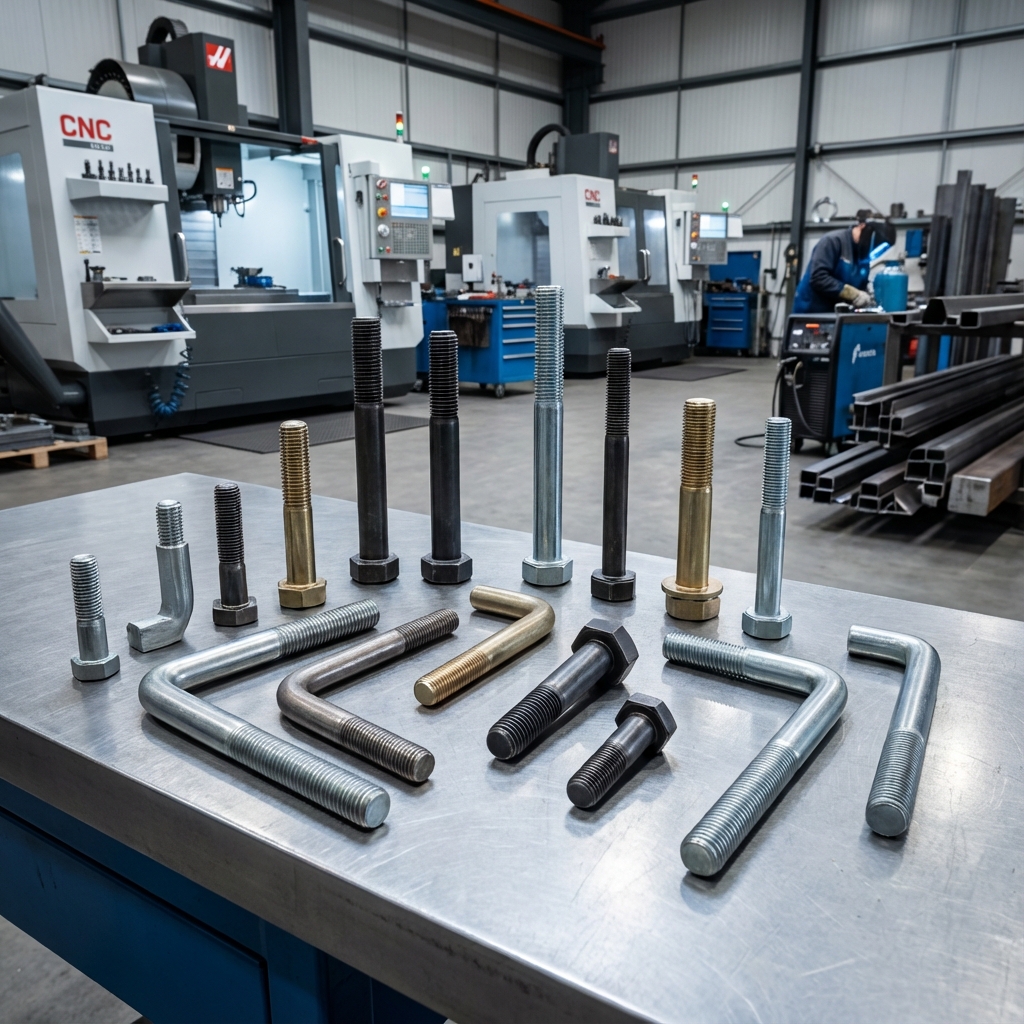
Ayask Steel supplied a 500+ piece foundation hardware package for JSW Dolvi Works in Maharashtra. The scope included anchor bolts, anchor plates, nuts, washers, sleeves, and related hardware used across CSP and CSP2 areas tied to caster foundation, roughing mill, finishing mill, and tunnel furnace work.
The project required disciplined scope control, segregation by assembly type, and clear traceability across multiple bolt formats and property classes. This case study highlights the engineering and execution priorities involved in supplying a drawing-led foundation hardware package for a major steel plant installation.
Project Snapshot
- Customer and site: JSW Dolvi Works, Maharashtra
- Project references: CSP and CSP2 foundation packages
- Documented equipment areas: Caster foundation, roughing mill, finishing mill, and tunnel furnace A
- Supply scope: Anchor bolts, T-head bolts, threaded bolts, anchor plates, and associated hardware
- Documented bolt property classes: 5.6 and 8.8 in the main package, with one later M24 line identified as 5.8
- Delivery structure: Phased orders scheduled between April 30, 2025 and December 9, 2025
Project focus: This case study focuses on package scope, hardware mix, traceability requirements, and delivery sequencing across the foundation system.
Project Scope
The package structure itself reflects the complexity of the assignment: multiple anchor formats, multiple property classes, multiple installation zones, and a supply scope that had to remain aligned from drawing release to dispatch.
| Documented package element | Representative scope elements | Why it matters |
|---|---|---|
| Anchor plate lines | Single and double anchor plate assemblies tied to caster foundation work | Confirms that plates were part of the package, not just loose bolts |
| Mixed bolt formats | Threaded, T-head, anchor-bolt, stud, and masonry or foundation bolt descriptions | Shows why BOM control and dispatch segregation are critical |
| Mixed property classes | 5.6 and 8.8 across the main package, plus a later M24 anchor-bolt line called out as 5.8 | Requires strict identification to prevent wrong-hardware mixing at site |
| Wide size range | Recorded designations include sizes from M20 and M24 up to M160 | Large-diameter hardware changes fabrication, handling, inspection, and packaging requirements |
| Phased delivery | Scheduled dispatches visible across April, August, and December 2025 orders | Suggests the package had to align with construction or installation sequencing, not a single bulk shipment |
In practical terms, this is the kind of scope where even a small documentation error can create site confusion. A bolt marked for one location, property class, or assembly format cannot be casually swapped into another foundation point. That is exactly why disciplined drawing control and traceability matter in industrial foundation work.
Property Class and Material Specification
A key technical point in foundation hardware supply is distinguishing fastener property class from anchor plate material specification. Under ISO 898-1, property classes such as 5.6 and 8.8 apply to bolts, screws, and studs. Where an anchor plate requires a specific steel grade, that requirement should be stated separately on the drawing, BOM, or MTC schedule.
What This Means in Practice
Mixed-class foundation packages should be controlled by assembly, drawing reference, and identification marking rather than shorthand naming alone. This helps ensure that plate requirements, bolt classes, and associated hardware remain correctly matched throughout production and dispatch.
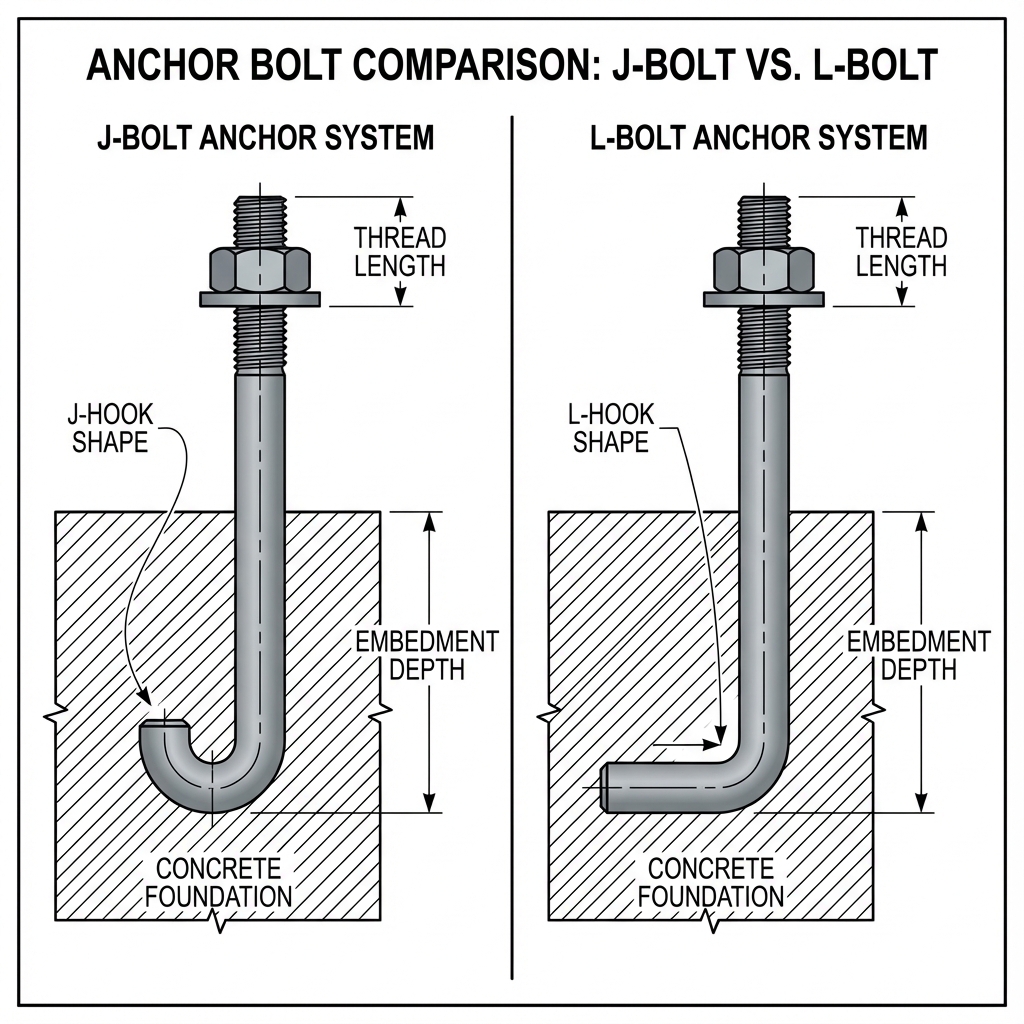
If you need a refresher on foundation hardware formats, our foundation bolts guide and J-bolts vs L-bolts comparison break down where different anchor forms are typically used.
Engineering Considerations
- Cast-in hardware has low tolerance for site correction: Once sleeves, bolts, and plates are fixed into a foundation plan, mismatch can trigger rework, slotting, or hold-ups during erection.
- Mixed assembly formats increase handling risk: T-head bolts, threaded bolts, studs, plates, washers, and nuts must stay grouped correctly by location and drawing reference.
- Large-diameter items change shop-floor discipline: Hardware running into M80, M100, M110, and M160 sizes affects threading, straightness checks, packing, and lifting.
- Property-class segregation matters: 5.6, 5.8, and 8.8 hardware should not be mixed in dispatch, documentation, or site identification.
- Foundation packages are documentation-heavy: Buyers usually need material traceability, dimensional checks where specified, and clear linkage between hardware, drawings, and dispatch lots.
Execution Priorities
For a project of this nature, dependable execution depends on a few non-negotiable controls:
1. Drawing-Led Segregation
Split the BOM by location, assembly type, and property class before production starts. In real projects, this prevents a roughing-mill assembly from being packed with finishing-mill hardware or a caster-foundation plate set.
2. Thread, Fitment, and Plate Interface Control
For anchor hardware, dimensional quality is not just about overall length. Thread quality, nut engagement, washer fit, sleeve compatibility, and anchor-plate hole alignment all affect whether the supplied assembly can be installed without site improvisation.
3. Traceability by Heat, Lot, and Assembly Group
A well-run package should let the buyer trace each group of hardware back to its relevant material and inspection documents. This is especially important when the same project includes more than one property class or multiple foundation locations.
4. Dispatch Planning by Installation Sequence
The phased delivery structure shows why sequencing matters. For project-critical foundation work, dispatch planning should follow site installation priorities rather than simply clearing finished goods from the shop floor.
What Engineers and Procurement Teams Can Learn from This Case
- Separate fastener class from plate material in the RFQ: If the anchor plate must be a specific grade, write it explicitly instead of assuming it follows the bolt class.
- Ask for the full assembly scope up front: Bolts alone are not the same as a complete anchor assembly that includes nuts, washers, sleeves, and plates.
- Group by installation zone, not only by size: An M36 for one foundation location should not be packed as if it were interchangeable with an M36 in another assembly family.
- Make traceability part of the commercial requirement: If you need MTCs, identification marks, or lot-wise documentation, specify that before fabrication starts.
- Use one supplier or one control point where possible: Mixed hardware packages become harder to manage when responsibility for fitment and documentation is scattered.
For buyers comparing suppliers, this is also where material certification and traceability discipline move from paperwork to project risk control.
Key Takeaway
This project illustrates the discipline required to execute a substantial, drawing-led foundation hardware package across multiple plant areas, mixed assembly types, and multiple property classes.
In industrial foundation work, success depends on keeping manufacturing, identification, documentation, and dispatch aligned to the drawing set from start to finish. That discipline is what allows complex anchor bolt and anchor plate packages to move from fabrication to site use with clarity and control.
Need anchor bolts or anchor plates manufactured as per drawing?
If you are sourcing a foundation package for a steel plant, rolling mill, furnace line, or shutdown project, Ayask Steel can review your drawings, define the supply scope clearly, and help separate bolt class, plate material, and documentation requirements before production begins.