Metal Sheet Weight Calculation: A Guide to Formulas and Gauge Charts
The Ayask Steel Engineering Team writes for plant buyers, project engineers, and procurement teams sourcing custom steel components as per drawing. Our perspective comes from 40+ years of manufacturing rolling mill components, replacement parts, and fabricated-and-machined assemblies where fit, function, delivery, and documentation all matter.
- 40+ years of continuous manufacturing operations
- Experience with replacement parts, shutdown support, and project-based industrial manufacturing
- Built-to-print fabrication and machining for OEMs, EPCs, steel plants, and maintenance teams
"In the world of precision manufacturing, the difference between a 1.2mm sheet and a 1.5mm sheet is more than just a fraction—it's a critical factor in total assembly weight and structural behavior."
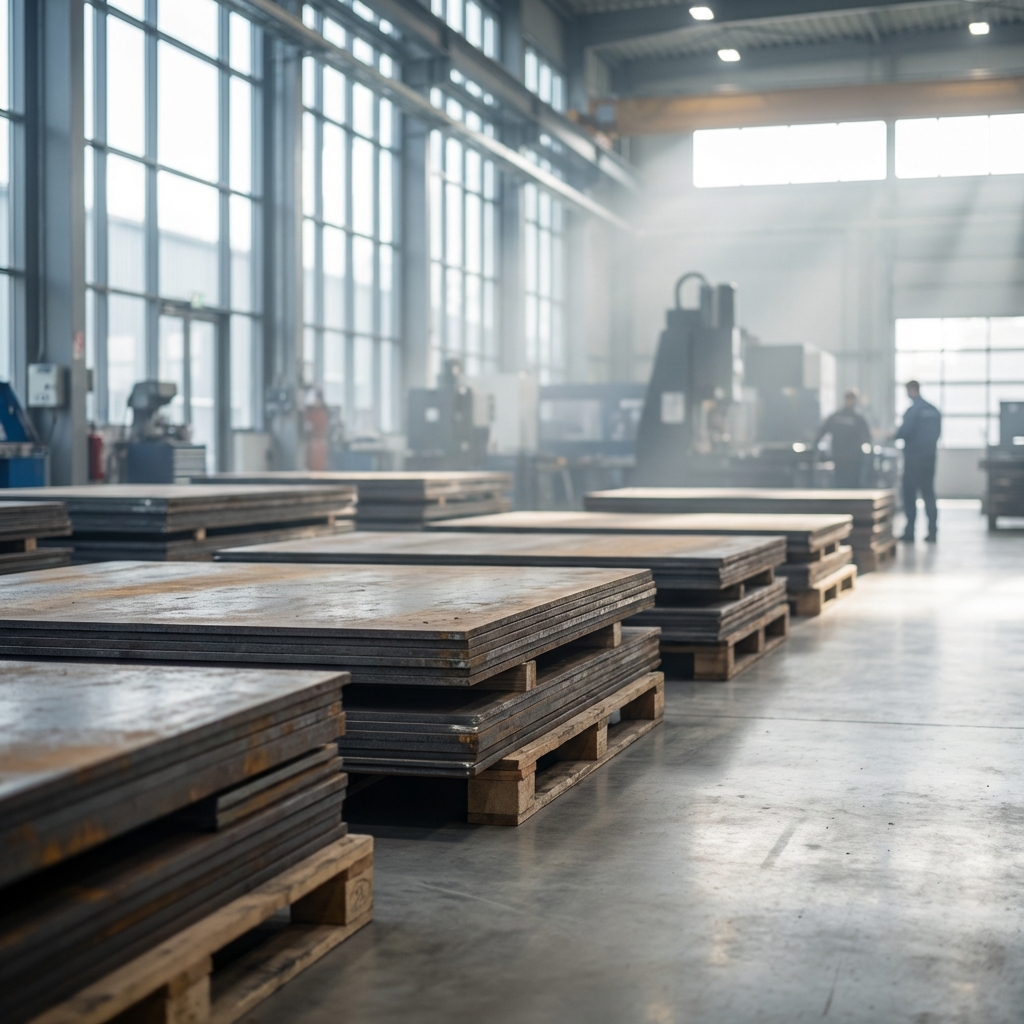
Metal sheets are the "skin" of the industrial world. From electrical enclosures to automotive body panels, these thin sections are specified by their thickness (often in Gauge or Millimeters). Calculating their weight accurately is essential for material costing and determining the load-bearing capacity of specialized housings.
The Area-Density Relationship
Since metal sheets are thin, we often define their weight per unit area (kg/m²). This simplifies the process for large-scale estimations.
Base Formula
Weight (kg) = Area (m²) × Thickness (mm) × Density Factor (7.85)
Gauge to Millimeter Reference
Many industries still refer to sheets by "Gauge" (SWG or AWG). For precision engineering, always convert to millimeters before calculation.
| Standard Gauge (SWG) | Thickness (mm) | Wt. per SqM (kg/m²) |
|---|---|---|
| 10 Gauge | 3.25 | 25.51 |
| 12 Gauge | 2.64 | 20.72 |
| 14 Gauge | 2.03 | 15.94 |
| 16 Gauge | 1.63 | 12.80 |
| 18 Gauge | 1.22 | 9.58 |
Estimate Large Sheet Inventories
Our tool handles both single sheets and bulk quantities. Perfect for warehouse inventory audits or project material planning.
The "Coating Effect" on Weight
Sheet metal is rarely used in its raw state. Galvanizing (Zinc coating) or Powder Coating adds a layer of material that can impact the total weight:
- Hot-Dip Galvanizing: Can add 2% to 4% to the total weight depending on the coating thickness (microns).
- Cold Rolled (CR) vs Hot Rolled (HR): CR sheets typically have a smoother finish and more predictable weight than HR sheets.
Frequently Asked Questions
What is the formula for calculating steel sheet weight?
How do I convert Gauge to Millimeters?
Does stainless steel weigh the same as mild steel?
How does galvanizing affect sheet weight?
What is the weight of a standard 8x4 feet sheet of 2mm steel?
Conclusion
Precision sheet metal estimation starts with accurate thickness measurement and a solid understanding of area-based weight factors. By using standard gauge-to-mm conversions, engineers can avoid the common pitfalls of underestimated material weights.
Ayask Steel provides technical expertise in metal procurement and precision manufacturing. Our focus on engineering detail ensures that your material specifications are met with absolute reliability.